Peptide Top Quality: Relevance Of Third-party Recognition

Authenticity Confirmation
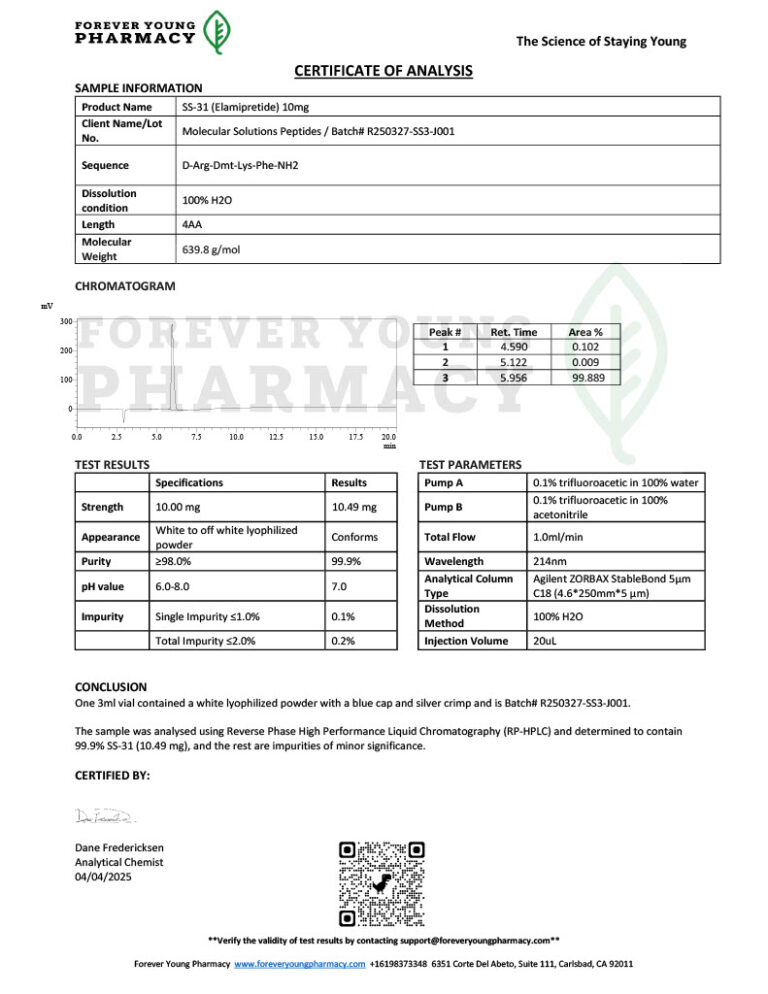
Researchers and pharma companies insist on high pureness since pollutants can create misleading outcomes, mask real organic activity, present poisoning, or decrease the efficiency of prospective drugs. Trustworthy, reproducible information depends on pure starting products. The repercussions of using unclean peptides can range from discouraging obstacles to serious safety worries. A premium chromatogram has a solitary, symmetrical major optimal with a level standard on either side.Where can I send my peptides to examine for purity?
ACS Peptide Examining Labs is a professional peptide evaluation laboratory that accepts examples from all 50 states. Whether you need to test peptide purity, validate a vendor''s Certification of Evaluation, or run thorough pollutant testing, our laboratory provides fast, accurate results with in-depth coverage.
Discover Material Categories
The purity of peptides is generally evaluated using high-performance liquid chromatography (HPLC). HPLC divides peptides based upon their interactions with a fixed phase, enabling pollutants and byproducts to be recognized and evaluated. Additionally, mass spectrometry (MS) can be made use of to verify the peptide's molecular weight and sequence, giving additional verification of purity by identifying contaminants and destruction items. This extensive overview covers everything you need to know about peptide testing labs. Whether you're confirming a new supplier or repairing unexpected outcomes, this source offers you the knowledge to make informed choices regarding peptide quality. For many readers of a peptide novices' overview, "research-grade" is the realm you run in. Any type of significant discrepancy recommends the example isn't the declared peptide. If you assume 100% material when the actual web content is 75%, your computed dosages are 25% lower than planned. This clarifies why some researchers report weaker results than expected despite complying with published methods. ESI-MS (Electrospray Ionization Mass Spectrometry) creates multiply-charged ions, which enables evaluation of bigger peptides and gives higher level of sensitivity. ESI is usually combined with liquid chromatography (LC-MS), combining splitting up and identification in a single analysis. The repercussions mediocre peptides extend beyond wasted money.- Vendors who give the very same COA for months of production are not demonstrating appropriate quality control.
- Documents review asks whether the record is batch-specific, traceable, and outlined enough to be examined.
- Peptide pureness is validated mainly via reverse-phase HPLC, which divides the target compound from contaminations and quantifies their relative peak locations.
- The best peptide vendors purchase genuine quality control.