Peptide Testing: Hplc & Mass Spec Pureness Guide Peak
Recognizing Peptide Pureness Screening
Finally, recognizing peptide pureness degrees and grades assists you make notified decisions for your experiments. A peptide's purity percentage informs you just how much of that sample is the real deal versus by-products, with usual research grades being around 95% up to 98-99% for added purity. Analytical HPLC and MS are your buddies right here-- HPLC measures pureness, and MS verifies identification, with each other guaranteeing you recognize what's in your tube.Reliable peptide distributors always note their products in this manner and give top quality reports with HPLC and MS information to back up the pureness degree. As long as you acquire peptides from a relied on resource that supplies a full certificate of analysis, you can be positive in the peptide's pureness grade and usage scope. Peptides are evaluated with a combination of methods, consisting of HPLC for pureness, mass spectrometry (MS) for https://pharmagrade.store/ sequence confirmation, and nuclear magnetic vibration (NMR) for architectural analysis. These methods help identify the peptide's structure, validate the molecular weight, and identify any kind of structural modifications or pollutants, guaranteeing the peptide meets quality and spec needs. With our extensive peptide evaluation system, Imaginative Proteomics has created a very sensitive and customized system.
During solid-phase synthesis, each amino acid coupling action has a return of about 99-- 99.8%. When a combining falls short, the expanding chain is topped to avoid further elongation of the incorrect series. The outcome is a peptide that's shorter than intended-- missing one or more amino acids.Quality Control For Researchers: Why It Begins With Recognition

- Likewise, stay clear of laboratories that can not demonstrate verified analytical methods.
- The mobile stage, typically a combination of water, acetonitrile, and an acid modifier, is saved in tanks and provided through the system by a high-pressure pump.
- We offer physical property testing that assists groups function more effectively with tough examples.
- The mobile stage is a slope of water and an organic solvent like acetonitrile, typically with a small amount of trifluoroacetic acid (TFA) to develop the heights.
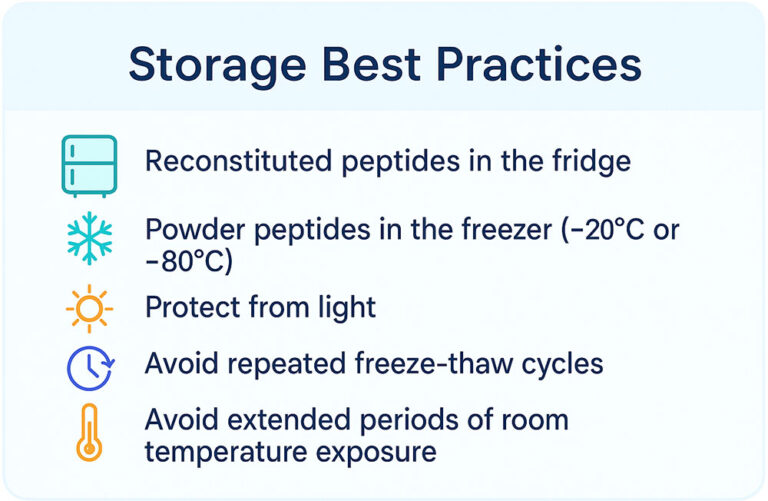
It is one factor correct peptide storage space and reconstitution practices matter. Partial peptide fragments can arise from insufficient synthesis or post-synthesis deterioration. These fragments are normally smaller than the target peptide and may elute at different retention times.
Encapsulation Effectiveness And Medicine Loading Analysis
The pureness of peptides is typically examined making use of high-performance liquid chromatography (HPLC). HPLC divides peptides based on their communications with a fixed phase, permitting contaminations and spin-offs to be determined and quantified. In addition, mass spectrometry (MS) can be utilized to validate the peptide's molecular weight and series, supplying more confirmation of pureness by finding pollutants and degradation products. If you have actually ever gotten an artificial peptide for a lab experiment, you have actually most likely observed a pureness portion on the certificate of evaluation-- generally values like 95%, 98%, or perhaps 99%. Peptide purity is a crucial high quality metric that tells you what fraction of a peptide example is the intended item versus unwanted by-products.
What Various Other Examinations Might Include
Other spectroscopic methods, such as Infrared (IR) or UV-Vis analysis, are sometimes utilized for rapid top quality checks or architectural verification. This is why trusted distributors provide both HPLC and MS data on their Certificates of Analysis. Peptides in microspheres and nanoparticles may with matrices, making it tough to divide totally free and encapsulated kinds. We make use of dialysis, ultrafiltration incorporated with HPLC/UV methods to medically examine encapsulation efficiency and medication loading. These evaluations are valuable when customers need greater than a mass range and chromatogram to evaluate whether a lot is genuinely fit for measurable work.
It's feasible to have a peptide that is, state, 95% pure by HPLC and yet the web peptide material is something like 70% of the powder's weight (the remainder being water and salts). Don't be startled-- this is typical and is usually established by different analyses (like amino acid evaluation). Peptide purity is most commonly established by high-performance fluid chromatography (HPLC) with a detection wavelength of 220 nm, which is optimum for spotting peptide bonds. This approach separates peptides from impurities and evaluates both target peptides and contaminants, making sure high-grade samples for research study.